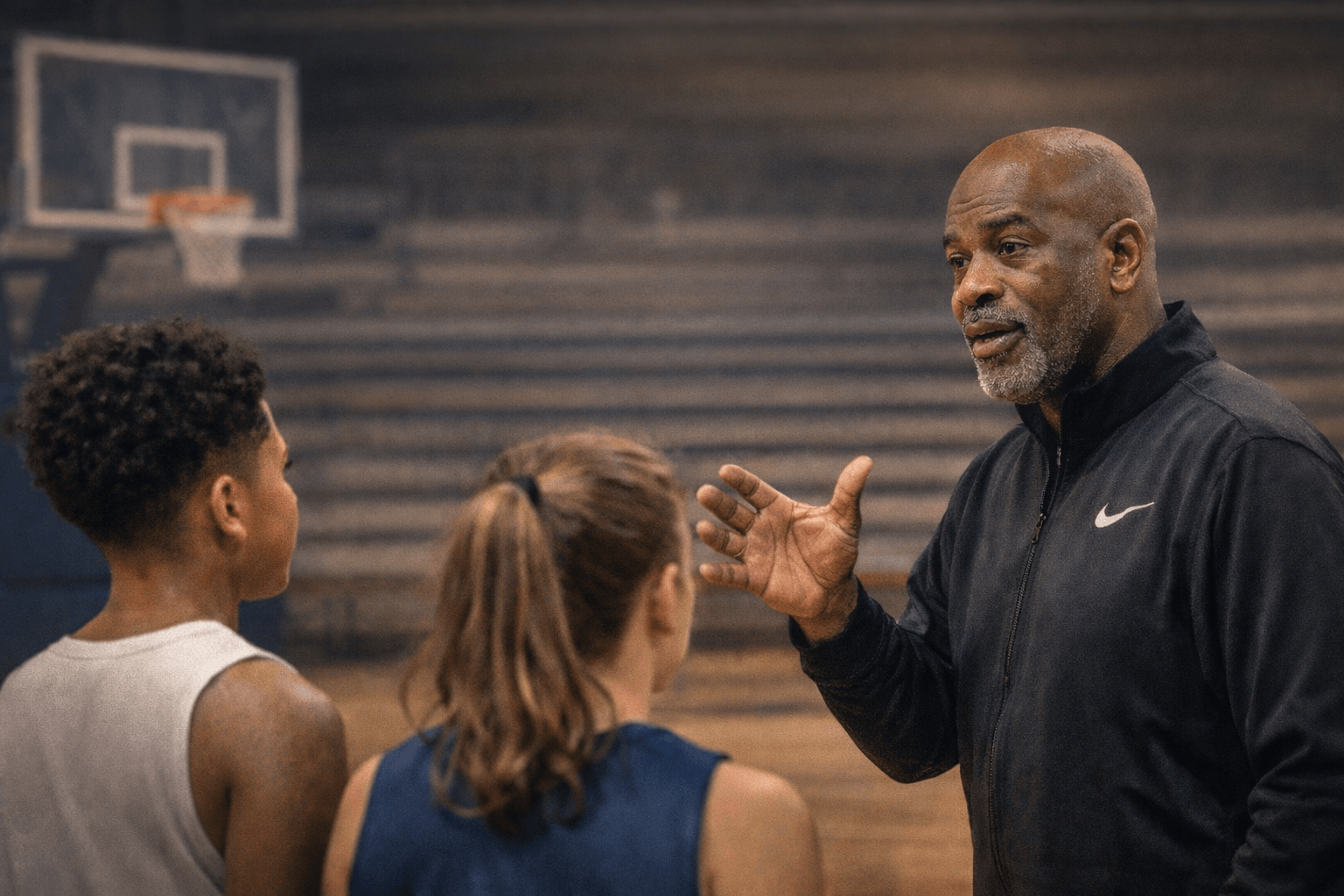
Understanding the Responsibility of Coaching Young Athletes
Coaching young athletes is one of the most important responsibilities a person can take on in sports.
Table of Contents
- Why Youth Coaches Matter So Much
- Leadership Does Not Require Fear or Negativity
- Coaching Youth Is Different Than Coaching Older Athletes
- Teaching the Game Starts With the Basics
- Shooting Should Build Confidence, Not Bad Habits
- Teaching Ball Movement and Team Play
- Defense, Effort, and Accountability
- The Importance of Fairness in Youth Coaching
- Parents Play a Role in Youth Sports Culture
- Conclusion
Overview
A powerful message shared by a high-level basketball coach on YouTube sparked an important conversation about youth sports and coaching. The message was simple, but meaningful: youth coaches may be the most important coaches an athlete ever has.
That idea deserves attention.
Around the world, youth coaches are often the first coaches a child ever experiences. That first experience matters more than many people realize. It frequently determines whether a young athlete continues to play sports or walks away from them entirely.
Long before high school, college, or professional coaching becomes relevant, youth coaches are shaping how kids feel about competition, confidence, teamwork, and themselves. That responsibility cannot be overstated.
Why Youth Coaches Matter So Much
For many children, a youth coach is the first adult outside their family to hold them accountable, encourage them, correct them, and guide them in a structured environment. What kids take away from that experience often stays with them for life.
Whether coaches realize it or not, young athletes are constantly observing how adults lead. They are learning how to respond to mistakes, how to handle criticism, how to treat teammates, and how to define success.
A positive coaching experience can build confidence and resilience. A negative one can create fear, anxiety, or a desire to quit altogether.
Leadership Does Not Require Fear or Negativity
Discipline and structure are necessary in youth sports. Coaches must lead, teach, and set expectations. However, leadership does not require yelling, screaming, cursing, or embarrassing young athletes.
Young players are still developing emotionally and mentally. They are learning who they are and what they are capable of. Coaches who rely on fear or negativity may get short-term compliance, but they often do long-term damage.
True leadership creates an environment where athletes feel safe enough to learn, fail, and improve.
Coaching Youth Is Different Than Coaching Older Athletes
At higher levels of basketball, players are already formed. Their habits, confidence, and mindset have largely been shaped.
At the youth level, athletes are still becoming who they will be.
That’s why youth coaching may actually be more impactful than coaching at any other level. Youth coaches are not just teaching basketball skills — they are shaping how young athletes approach challenges, feedback, and teamwork.
Basketball, like any sport, is a vehicle for life lessons. How coaches use that vehicle matters.
Teaching the Game Starts With the Basics
One of the most common mistakes in youth sports is trying to skip steps.
Young athletes don’t need advanced plays or complicated systems. They need a strong foundation built on basic skills and understanding.
Youth basketball should focus on fundamentals such as ball handling with both hands, passing, shooting form, defensive footwork, movement without the ball, and finishing layups correctly.
These basics are not boring — they are essential. Skipping them only creates bigger problems later.
Shooting Should Build Confidence, Not Bad Habits
Teaching shooting at the youth level requires patience and restraint.
Young players should not be encouraged to take shots they are not physically ready to make. Allowing kids to launch long-range shots too early often leads to poor mechanics and frustration.
Instead, shooting should start close to the basket. Young athletes should learn what success feels like from five to ten feet before moving farther away. Confidence is built through repetition and success, not struggle.
Even at the highest levels, many workouts focus heavily on close-range shooting. Fundamentals never go out of style.
Teaching Ball Movement and Team Play
Youth players are often influenced by highlight culture. They see flashy moves online and want to imitate them without understanding the game underneath.
Coaches have a responsibility to teach that basketball is a team sport. Passing, cutting, spacing, and moving without the ball are skills that help everyone on the floor.
When young athletes learn to value ball movement over constant dribbling, they develop a better understanding of the game and become better teammates.
Defense, Effort, and Accountability
Defense is one of the most valuable teaching tools in youth basketball.
Learning how to move feet, stay in front of the ball, and play with consistent effort teaches discipline and accountability. Defense shows players that impact isn’t always measured by points.
Effort is a habit, and habits formed early often last.
The Importance of Fairness in Youth Coaching
Fairness is a cornerstone of good youth coaching.
If a parent is coaching their child’s team, fairness becomes even more important. Favoritism — whether positive or negative — harms development. Treating a child differently because they are your own sends the wrong message to the entire team.
Every athlete deserves the opportunity to learn, grow, and be challenged fairly.
Parents Play a Role in Youth Sports Culture
Parents also carry responsibility in youth sports.
If a team has a coach, parents must allow that coach to coach. Yelling instructions from the stands, directing kids to only pass to one player, or criticizing decisions during games undermines the team environment.
Concerns should be addressed privately and respectfully, not publicly and emotionally.
Parents teach children how to behave by example. Supporting the team, respecting coaches, and modeling accountability are just as important as skill development.
Related Coaching Insight
The message in this article was inspired by a coaching conversation that highlights the responsibility youth coaches carry in shaping young athletes. The discussion reinforces why leadership, fairness, and fundamentals matter so much at the youth level.
Conclusion
Coaching young athletes is not about wins, trophies, or recognition.
It’s about creating an environment where kids feel confident, supported, and motivated to learn. It’s about teaching fundamentals, accountability, teamwork, and respect.
Messages like the one shared by experienced coaches remind us just how important youth coaching truly is.
Understanding that responsibility — and embracing it — is what makes youth coaching meaningful and impactful.